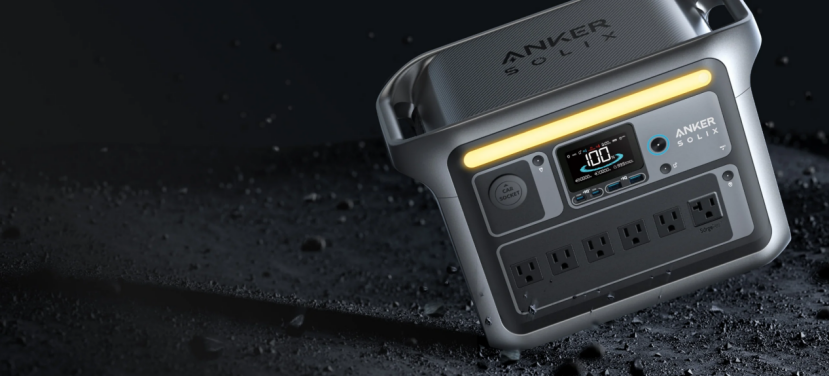
Sudden load spikes occur whenever an appliance demands more power at startup than during normal operation. Tools, compressors, blenders, pumps, refrigerators, and heating devices often pull two to three times their running wattage for a brief moment. These surges test how well a portable power station manages rapid shifts in electrical demand. A high-capacity model such as the Anker SOLIX F2600 Portable Power Station, equipped with a 2,560Wh LFP battery and 2400W continuous output with 2800W surge capability, demonstrates how modern systems maintain stability even under abrupt electrical stress. Understanding how power stations handle these fast changes helps users choose equipment confidently and operate devices safely in off-grid, home backup, and outdoor environments.
The Technical Systems That Manage Sudden Load Spikes
Inverter Architecture Determines How Quickly the Unit Responds
The inverter converts stored DC battery power into AC electricity. When an appliance demands a surge, the inverter must react instantly to deliver the required wattage without dropping voltage or shutting down. High-quality inverters use fast-switching electronics and robust MOSFET circuits to supply a stable output during the spike. A unit like the SOLIX F2600 maintains output control even when appliances such as kettles, microwaves, or power tools jump momentarily beyond their steady-state draw. The inverter essentially acts as the “shock absorber” for electrical stress. If the inverter responds slowly, lights may flicker, motors may fail to start, or the entire system may trigger overload protection. Strong inverter engineering ensures seamless delivery so appliances start cleanly every time.
Battery Chemistry and Discharge Stability Influence Surge Performance
A battery must deliver high current instantly for the inverter to handle large spikes. LFP (lithium iron phosphate) chemistry performs well in these fast-draw situations because it offers low internal resistance and stable voltage even under heavy load. The F2600’s LFP cells support rapid discharge without the thermal instability seen in older chemistries. This stability allows the system to provide strong momentary output without stressing the battery pack. Load spikes are short, but they demand a high degree of electrical elasticity. Batteries with strong thermal management and high discharge tolerance give power stations the ability to handle these surges repeatedly without degrading performance or reducing lifespan.
Smart Control Systems Regulate Surge Handling in Real Time
Modern power stations incorporate sensors, microcontrollers, and predictive algorithms to evaluate incoming load demands. These systems monitor temperature, current flow, and voltage fluctuations many times per second. When a sudden load appears, the control system allocates stored energy through the inverter at the appropriate rate. If the system senses an unsafe surge, it prevents damage by applying soft-start behavior or temporary output throttling. The Anker SOLIX F2600 includes advanced temperature monitoring and refined circuitry that respond to changes within milliseconds. Smart regulation helps avoid overload events while maximizing the amount of surge power available. This balancing act ensures appliances start reliably without compromising safety or efficiency.
Real-World Behaviors That Affect How Well Spikes Are Managed
Startup Patterns of Appliances Shape Surge Requirements
Different appliances produce different surge profiles. A refrigerator compressor may spike only for a moment, while a circular saw produces repeated bursts as it cuts through material. A blender motor may surge initially and then stabilize at a moderate draw. These patterns influence how continuously the inverter must manage transitions. A strong power station tracks these fluctuations as they occur and adapts. The F2600’s 2400W continuous output gives users enough headroom to run appliances with higher startup demands without constantly flirting with the system limits. Understanding these patterns helps users predict which tools will create heavier spikes and plan usage accordingly.
Multiple Devices Starting at Once Increase Instantaneous Demand
One device starting is manageable; several devices starting simultaneously can overload a weaker power system. For example, running a fridge, an induction cooker, and a coffee machine at the same time produces overlapping surge events. A high-capacity power station absorbs these stacked spikes only if the inverter and battery support the combined load. With its 2800W surge capability, the F2600 helps maintain smooth operation, but users still benefit from staggering startups to minimize instantaneous demand. Real-world surge performance depends not only on appliance design but also on how users schedule power usage.
Environmental Conditions Influence How Efficiently Surges Are Handled
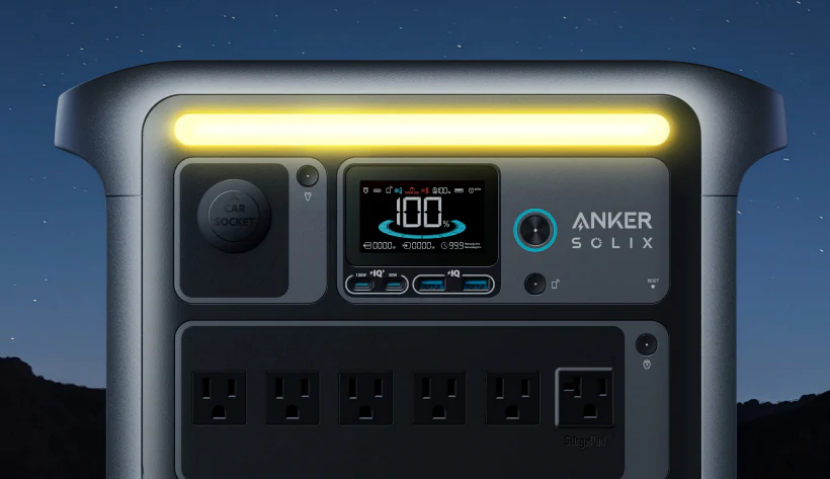
High temperatures reduce inverter efficiency and slow battery discharge responsiveness. Extremely cold conditions cause batteries to deliver current less efficiently. Both situations affect how well a power station handles fast load increases. Thermal control and advanced cooling help maintain performance under varying conditions. The SOLIX F2600 portable power station monitors internal temperature continuously, allowing it to sustain surge loads more reliably than systems without active management. Users who keep the station shaded, ventilated, and properly positioned improve surge behavior significantly.
Conclusion
Portable power stations handle sudden load spikes through a combination of inverter strength, battery chemistry, and intelligent control systems. Strong inverters respond instantly to startup surges, while stable LFP batteries provide the high-current output needed to maintain performance during bursts of demand. Smart monitoring and safety controls adjust real-time output to protect the system and connected appliances. A model like the Anker SOLIX F2600 Portable Power Station demonstrates how advanced engineering enables smooth operation even when tools, appliances, or heavy electronics create rapid load transitions. Understanding how these systems work helps users manage devices more confidently, avoid overload situations, and select the right power station for both predictable and unpredictable power needs.
Visited 1 times, 1 visit(s) today